March 2026
I Replaced My Accounting Subscription with a Single SQLite File
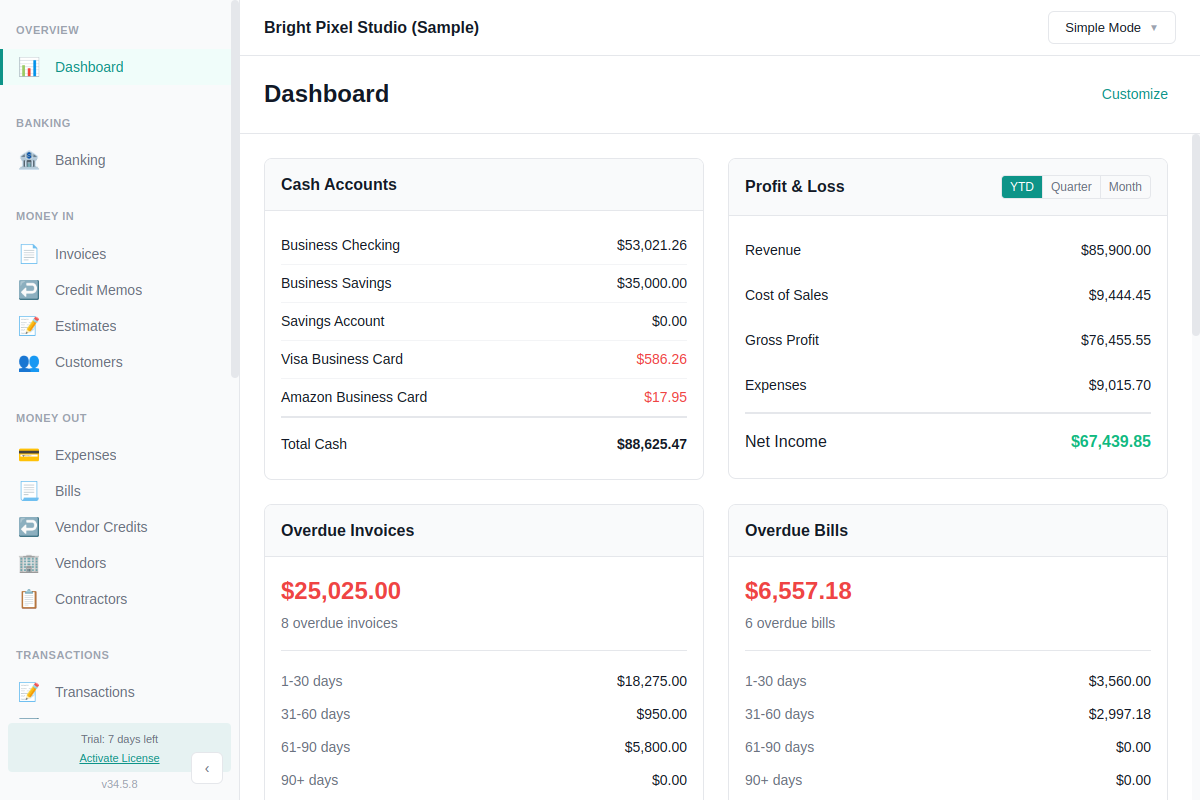
I've been running small businesses for about twenty years. A few different ventures, some contracting, some software products. For most of them, the accounting needs are the same: send invoices, track expenses, reconcile a bank account, run a few reports at tax time. Nothing exotic.
I used QuickBooks Online for years. It worked, but every time I opened it, something annoyed me. Pages loaded slowly. The UI kept changing. I used their payroll for a while and it made enough mistakes that I stopped trusting it. And every month, the subscription renewed for software I used maybe twice a week.
The thing that really bothered me was the data. All my financial history, every client, every invoice, every bank transaction, sitting on Intuit's servers. If I stopped paying, I'd lose access to my own books. That felt wrong.
I looked at QuickBooks Desktop, thinking it would solve the speed and data ownership problems. The interface felt like it hadn't been touched in 15 years. And Intuit is discontinuing it anyway, pushing everyone to the cloud. Dead end.
I kept thinking about how personal finance used to work. I went through Microsoft Money, Quicken, and a bunch of other desktop apps over the years. They all had the same thing going for them: they opened instantly, worked offline, and my data was a file on my computer that I could back up however I wanted. If the company disappeared tomorrow, the file still opened. I wanted that for my business.
I'm a developer, so I built it.
AllMy Ledger stores everything in a single .ledger file. It's a SQLite database. Want a backup? Copy the file. Moving to a new computer? Copy the file. Want your books on a USB drive? Copy the file. SQLite is probably the most battle-tested database engine in existence, and for a small business's accounting data, it's comically overqualified.
The app opens in under a second. Reports generate instantly because there's no network request. Bank reconciliation is importing an OFX file from your bank's website and matching transactions. No third-party aggregator logging into your bank account on your behalf.
It handles double-entry bookkeeping, invoicing, estimates, bank reconciliation, and 12 reports including Schedule C. It imports data from QuickBooks Desktop and QuickBooks Online. It runs on Windows, macOS, and Linux.
It's focused. It does bookkeeping, invoicing, estimates, bank reconciliation, and reports. It doesn't try to be an ERP. No payroll module, no inventory system, no mobile app. That's deliberate. Most of the freelancers and small business owners I know never touch half the features in QBO. AllMy Ledger covers what they actually use, without the rest getting in the way.
I've been using it for my own books for a few months now. I imported my QBO data, cancelled the subscription, and filed taxes with the reports it generates. It's a one-time purchase. No subscription, no account, no login required.
If you're in a similar situation, paying monthly for accounting software that does way more than you need while making the basics harder than they should be, take a look. There's a free 7-day trial.